The complex challenges facing African nations demand solutions that are not only effective but also informed by robust, contextual evidence. For too long, the journey from research to policy has been hampered by a disconnect: researchers working in isolation from the policymakers they aim to inform, and vice versa.
The Evidence to Policy (E2P) Training Programme, an initiative by the Center for Rapid Evidence Synthesis (ACRES), is challenging this status quo by placing collaboration at the very heart of its mission to broaden genuine Evidence-Informed Decision Making (EIDM) across the continent.
Funded under the Africa LEEPS initiative, the Programme’s design is not based on assumption but on rigorous investigation. It is informed by a comprehensive scoping review of the competencies required for EIDM, which uniquely incorporated the lived experiences of evidence intermediaries—the crucial “missing link” brokers who navigate the space between knowledge production and policy action. This review consistently revealed that while technical skills in evidence synthesis are vital, they are insufficient without the soft, collaborative skills required to build trust, communicate effectively, and co-create solutions.
Historically, this collaborative ground has been given insufficient emphasis by players in the EIDM ecosystem, leading to fragmented processes and interventions that ultimately weakened the embrace of EIDM by key stakeholders, especially time-pressed policymakers.
The E2P Training Programme is a direct response to this gap. It aims to systematically cultivate not just technical expertise, but also the cultural competence and collaborative muscles essential for policymakers and researchers to drive meaningful change together. This philosophy is embedded into every level of the Programme, creating a continuous learning journey that mirrors real-world policy processes.
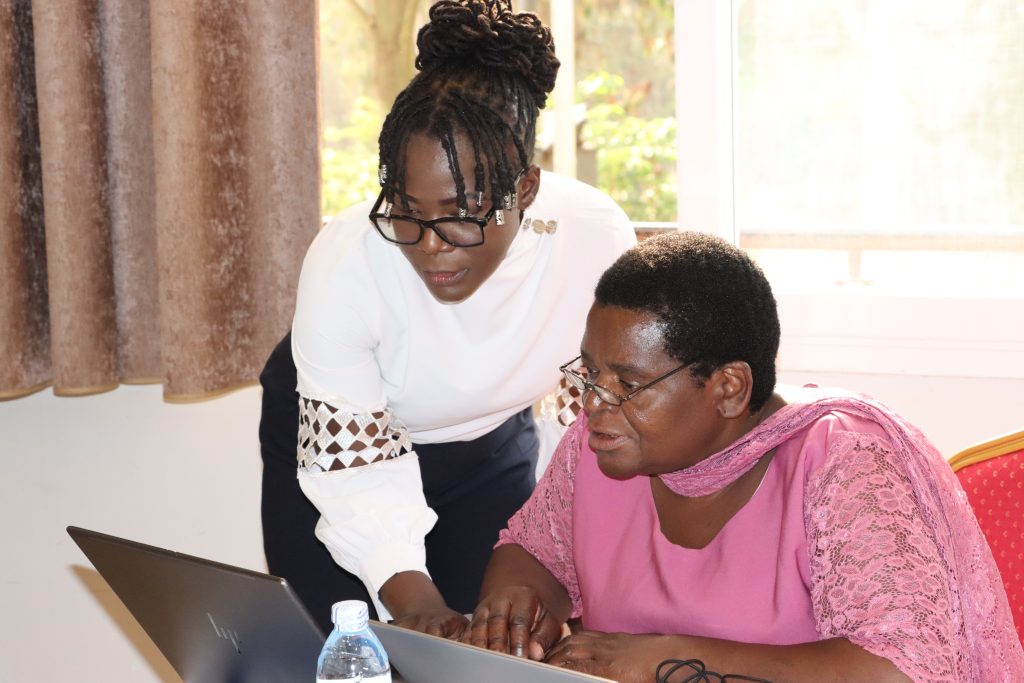
The first cohort of the Entry-Level Programme served as a proof of concept for this model. Learners underwent a rigorous exposure to collaborative practice that transcended theoretical discussion.
For instance, the module on Policy Communication and Engagement moves beyond simply teaching principles of communicating science to non-science audiences. It actively throws participants into the deep end of applying them.
Learners were also deliberately divided into cross-country teams, ensuring each group contained a mix of nationals from Malawi, Ethiopia, Uganda, and Tanzania. More importantly, each team was composed of both knowledge brokers and a sitting policymaker. This intentional design forced a microcosm of the real ecosystem to work together to tackle actual, real-life policy questions from their respective countries.
This approach ensured that the research outputs generated were not academic exercises but had direct applicability and value for improving lives.
It built a culture of interdependence, demonstrating that an individual’s success is intrinsically linked to their ability to work effectively with others across organisational and national boundaries.
At the pass-out of this pioneering cohort in Entebbe, Uganda, after 15 weeks of intense training, Dr. Rhona Mijumbi, Executive Director of ACRES, underscored the permanence of these new networks.
“Your motivation grows from your achievements—celebrate every win,” she advised the 19 graduates. “Stay connected; this work is too big to tackle alone. Lean on each other, collaborate, and unlock your collective potential.”
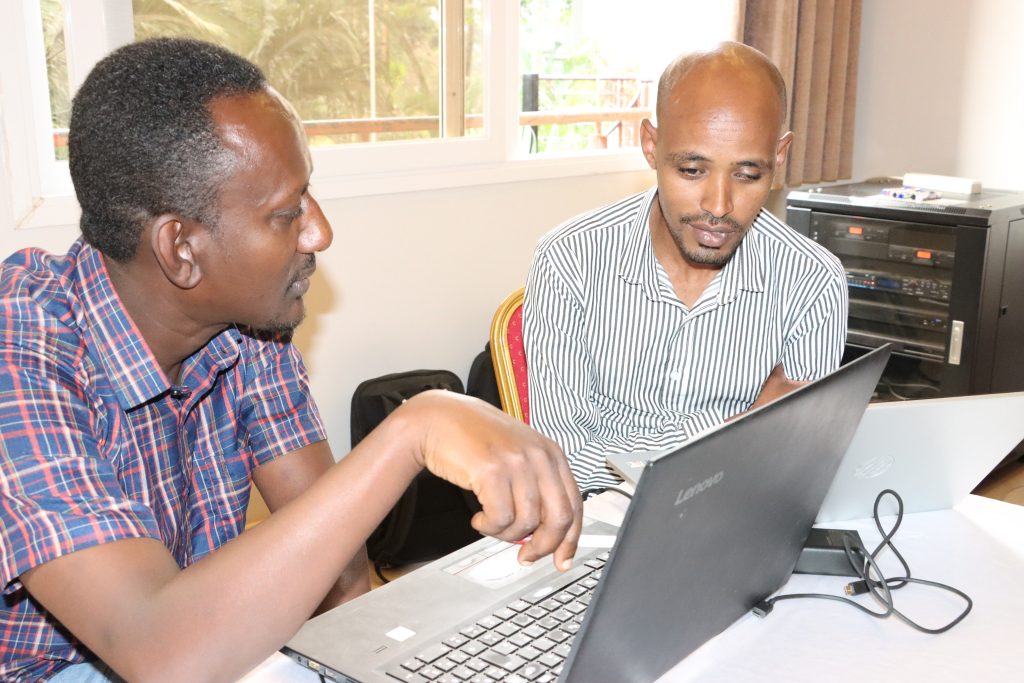
Building on this foundational experience, the collaboration model intensifies and becomes more focused in the Mid-Level programme. Here, the focus shifts from cross-country networking to deep, in-country partnership.
Knowledge brokers and policymakers are paired within their countries of origin to not only jointly handle advanced coursework but also to co-develop a common capstone project addressing a specific national priority in areas like health, climate change, or the intersection of both.
To ensure this work is grounded in reality and has immediate uptake potential, each team is supervised by a senior manager within the policymaker’s own organisation. This creates direct organisational buy-in and ensures the scholarly effort contributes tangibly to real-life evidence-informed policymaking processes from within the system.
Speaking at the opening of the Mid-Level orientation session in April 2025, Dr. Ismael Kawooya, Head of the Training Programme at ACRES, explained the goal of this close collaboration: “We are empowering you—the researchers—to approach policymakers with confidence, ensuring that when you engage them, you speak with clarity and authority.”
Ultimately, this sustained investment in collaboration is about more than just skills building; it is about ecosystem transformation.
By systematically breaking down silos and fostering a shared language and purpose between researchers and policymakers, the E2P Training Programme is doing more than transferring knowledge—it is building a resilient, pan-African community of practice.
By bridging the gap between research and policy with human connection and mutual respect, the Programme directly enhances the quality and relevance of public decisions, ensuring that the solutions to the problems affecting the common man are informed by reliable scientific evidence and forged through collective effort.
0 Comments